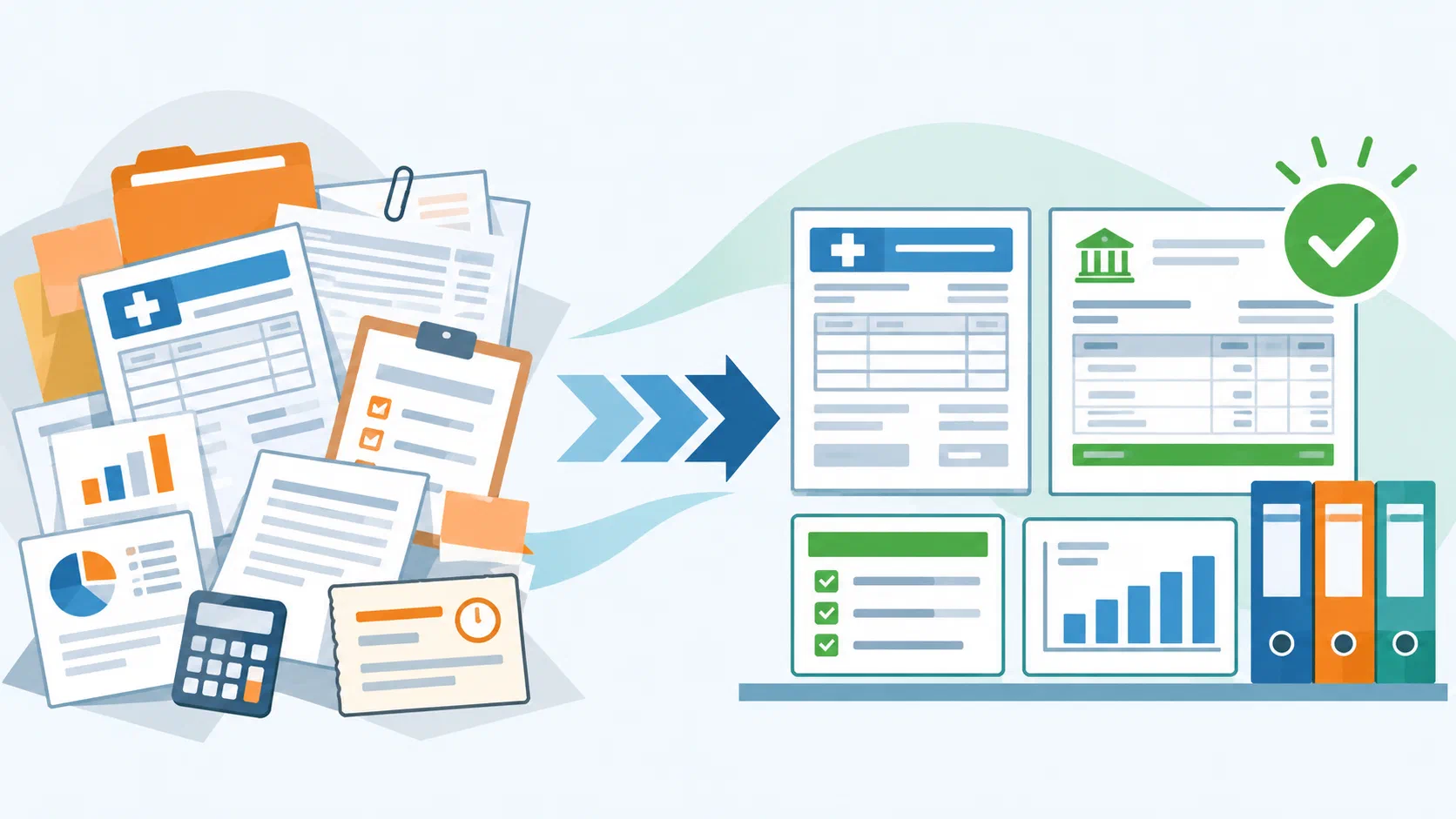
Billing is an essential part of running a behavioral health agency, but managing claims and payments isn’t always straightforward.
Clinical staff document services, billing staff prepare claims, and administrators need to know which services have been paid, denied, or are still awaiting reimbursement.
When this information lives in separate systems, keeping track of everything becomes more complicated than it needs to be.
The right electronic health record (EHR) software helps connect these steps, making billing easier to manage from the time a service is documented through the reimbursement process.
Connecting Service Notes to Billing
Accurate billing begins with documentation of the services provided.
Rather than entering the same information into separate clinical and billing systems, an EHR with integrated billing keeps service documentation connected to the claims process.
For example, Behavioral Health Connection allows administrators and supervisors to select service notes in batches and submit them electronically for billing.
This approach helps agencies manage claims efficiently while maintaining control over which services are submitted.
If you’re evaluating software for your agency, integrated billing and clinical documentation are important capabilities to consider.
Knowing Where Your Claims Stand
Submitting claims is only part of the process. Billing staff also need to know what happens afterward.
Has a claim been approved? Was it denied? Were adjustments made? Is it still moving through the reimbursement process?
Without clear visibility, answering these questions can require considerable follow-up and manual recordkeeping.
BHC automatically updates service notes with billing information, including approvals, denials, and adjustments. Staff can also view, sort, and filter claim statuses to identify claims requiring attention.
In addition, each claim also includes a history of information sent to or received from the payer, providing additional detail when questions arise.
Making Electronic Remittance Advice Easier to Understand
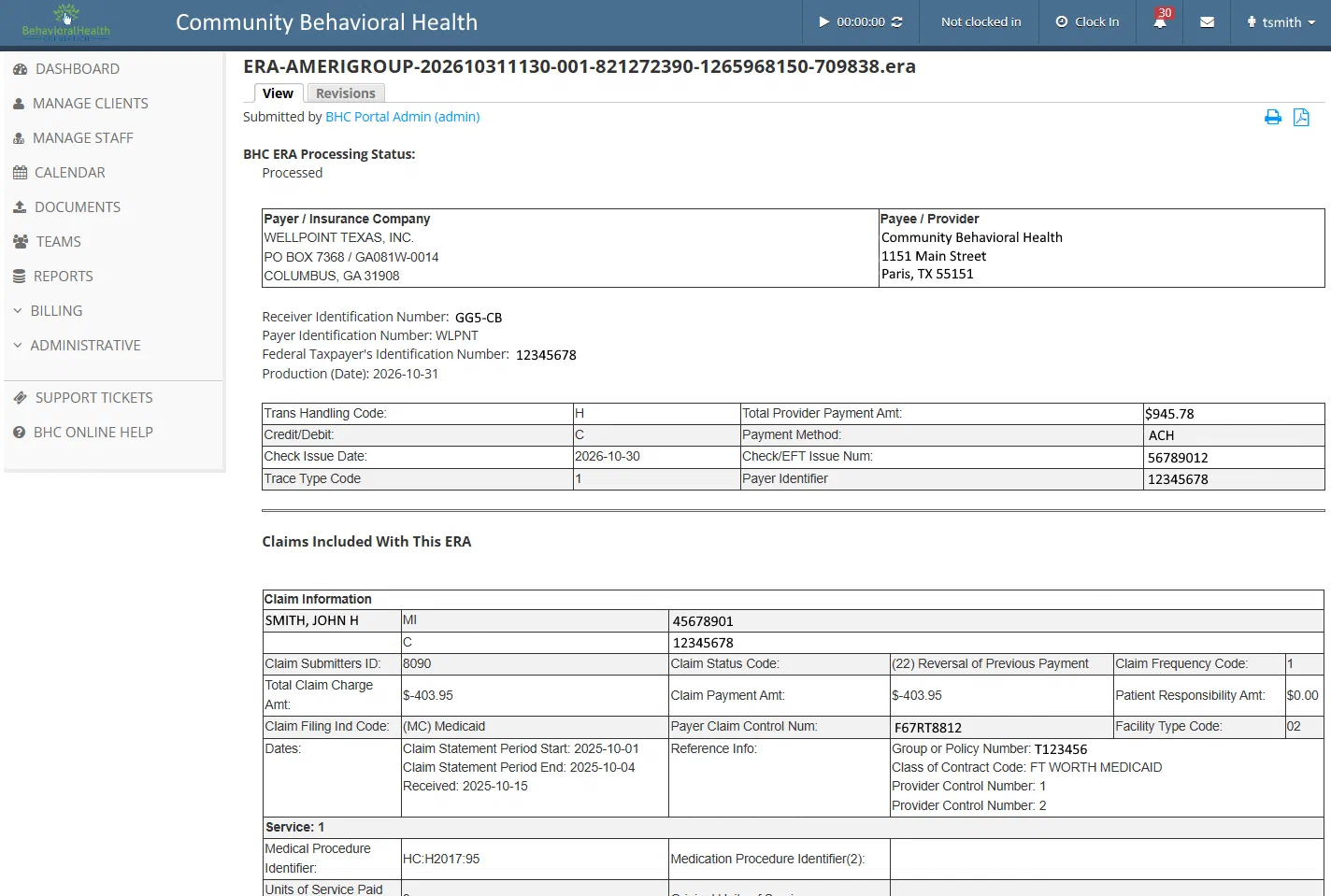
Electronic Remittance Advice (ERA) provides important information about how payers have processed claims, including payments, adjustments, and denials.
However, receiving this information is only useful when billing staff can easily review and understand it.
BHC uses Availity as its electronic billing clearinghouse and receives ERAs through the service. Rather than leaving staff to interpret raw remittance data, BHC presents ERAs in an organized, readable report format.
Combined with automatic billing status updates, this gives agencies a clearer picture of their reimbursement activity.
A More Connected Approach to Behavioral Health Billing
Billing software should help agencies stay organized without adding unnecessary administrative work.
By connecting service documentation, claim submissions, reimbursement statuses, and ERA reporting, BHC helps staff manage billing within the same platform they use for clinical operations.
When comparing behavioral health EHR systems, consider how easily your billing staff can follow a claim from submission through reimbursement.
And because affordability matters, be sure to review available plans and billing options when evaluating the total cost of your software.
The goal isn’t simply to submit claims electronically. It’s to give your agency the information it needs to manage billing with less confusion and better visibility.